Only a speech and language therapist can do these things.

Why specialist skills matter when it comes to speech sounds,
talking and communication
When your child is finding communication tricky, there can be lots of people involved — parents, teachers, teaching assistants, and therapists all play an important part. But some things can only be done by a qualified Speech and Language Therapist (SLT). These are specialist tasks that need professional training, clinical reasoning, and an understanding of how communication develops. According to the Royal College of Speech and Language Therapists (RCSLT), Speech and Language Therapists are “experts in the science and practice of communication, uniquely qualified to assess, diagnose and support people with speech, language and communication needs across the lifespan.”
Here’s what makes an SLT’s role unique, and why it matters for your child
1. Assessing your child’s speech, understanding of language, talking, and communication skills
SLTs are trained to assess how your child understands and uses language, communicates with others, and pronounces words and sounds. Speech and Language Therapists are highly skilled in using a wide range of assessment and observation tools — including checklists, standardised assessments and informal assessments — to gather detailed information about a child’s communication strengths and needs. These are all designed to help us understand your child’s strengths and what might be holding their communication back. From there, we can determine why your child is finding something difficult and what will be most helpful.
2. Providing specialist therapy
Once we’ve completed an assessment, SLTs can design and deliver therapy that’s completely tailored to your child. Therapy isn’t just about practising sounds or words — it’s about supporting real communication and confidence. Sessions are based on evidence, your child’s individual profile, and what matters most to your family. Speech and Language Therapists set goals that not only target communication skills but also support educational attainment, helping children access learning more fully and participate confidently in the classroom. Every therapy plan includes clear, realistic goals — we call these SMART targets (Specific, Measurable, Achievable, Relevant, and Time-bound).
These goals focus on what really matters for your child’s communication, such as being able to ask for what they want, join in play, or make themselves understood by friends and family.
Sometimes, parts of therapy can be carried out by trained assistants, teachers, or parents — but the SLT always remains responsible for making sure activities are safe, suitable, and effective. This is called safe delegation — and it means your child is always supported under the guidance and oversight of a qualified therapist. In line with RCSLT guidelines, certain complex speech and language presentations — such as childhood apraxia of speech require that therapy is directly provided by a qualified Speech and Language Therapist, as evidence shows specialist expertise is essential for effective intervention.
3. Sharing knowledge and training others
Speech and Language Therapists don’t just work with children — we also work with the people around them.
We train and support parents, carers, and school staff to understand your child's primary needs and how to support their needs in everyday life. That means you’ll know exactly how to help your child at home, and everyone around them can use consistent strategies that make a real difference.
To find out more about the training we provide at Serennu Therapies, take a look HERE.
4. Listening closely, observing movements, and transcribing speech
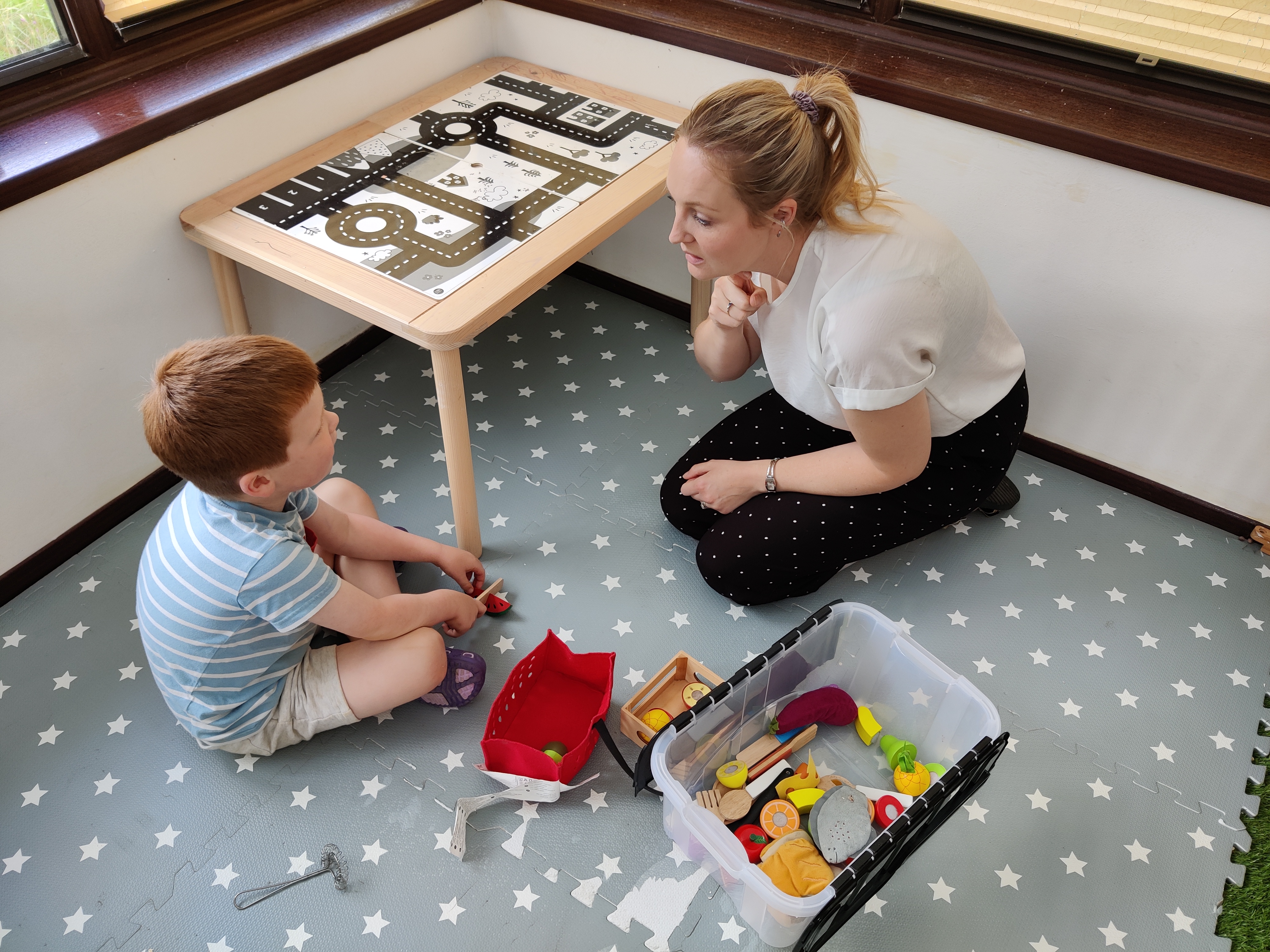
SLTs have a special skill called phonetic transcription, which means we can write down exactly how a child produces sounds. This helps us understand speech patterns, spot areas of difficulty, and track progress over time. Speech and Language Therapists also carefully observe motor planning and movement patterns - looking at how the jaw, lips, tongue, and breath support work together. These areas can influence speech production and overall communication development.
It’s one of the most detailed parts of our role — and it helps ensure that therapy is targeted and effective.
5. Parent Coaching and AAC Support
Speech and Language Therapists are uniquely trained to guide parents in supporting their child’s communication. Whether it’s coaching on strategies for everyday interactions or introducing and tailoring Augmentative and Alternative Communication (AAC) systems, SLTs have the specialist knowledge to ensure approaches are evidence-based, safe, and effective. This expertise ensures families get the right support for their child’s individual needs, maximising communication success at home, at school, and in the wider world.
Speech and Language Therapists bring together specialist knowledge, evidence-based practice, and a genuine love of communication. We don’t just help children speak or use words — we help them connect, be understood, and take part in the world around them.
Early help can make a huge difference — and we’re here to guide you
every step of the way.
Book a FREE consultation call with us today, or explore our on-demand training and digital projects to start making a difference from home.
Here always,
Sara & Rebecca


